Don’t Invite Me Unless There’s Matcha
Activities are the Backbone for a Social Life
I remember back in elementary school we had something called “Specials”. Every week or 2, we rotated into a special activity – art, music, gym, etc. It took us out of our everyday classroom, and brought us into a new space with something for our whole class to connect around. Now, I see this same dynamic being replicated in ‘Adult World’. All around me, I see run clubs, watch parties, book clubs, and crafting workshops. I’ve even seen a new phenomenon this year coined “Soft Socializing”, a low-pressure way to connect around an activity, no forced yapping, just doing. This all points to one thing: organized activities aren’t just filling the time; they’re keeping social life alive.
Eventbrite’s latest 2026 study showed that 58% of Gen Z and Millennials prefer when socializing isn’t the main focus desiring places to sit, observe, and control how they interact.
We’re living in a world where more than 30 million people work remotely, we’ve let go of the nuclear family model (God forbid you talk about having kids to anyone in their 20s, even early 30s), and adults are finding it harder to connect and form friendships. We’ve had to evolve our way of maintaining a social life. And nowadays, matcha is replacing the cocktails.
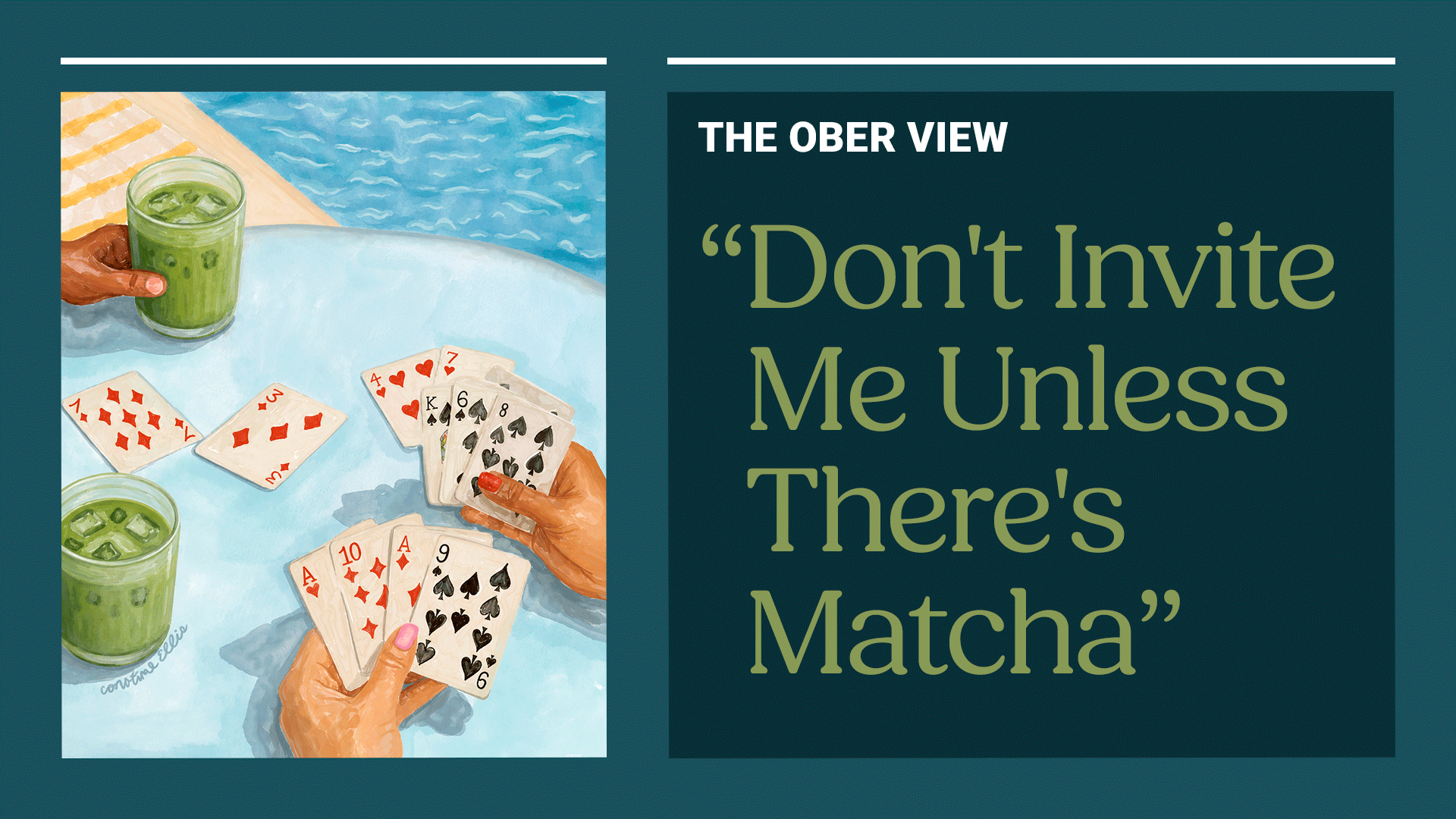
I recently went to a monthly-based event called “Touch Grass with Friends”. The first event they put together started off as an outdoor day for people to come together picnic style at a park, but when I went to the 4th installment, it was much more than I expected. There was a yoga session, a gigantic connect 4 station, a game of tug of war – and yes, a matcha cart. Everyone was beautifully engaged and present. In a generation where we are repeatedly defined by our phone habits, nothing has ever brought us together more to create intentional spaces to connect.
So where do brands fit within this activities-driven, social infrastructure? Well, for one, don’t act like a brand – you don’t need to ROI the hell out of this, I promise. This is less about sales and conversion and more about facilitating activities that give people a reason to gather. Brand love is built by building for others, so if people want more intentional social spaces, why not create them?
There are many brands that do this well today:
Apple’s ‘Today at Apple’ Sessions hosts free in-store teaching sessions for people of all ages and skill levels. [Learn More]
Lululemon partners with local communities to host summer yoga classes designed to help people recharge and reconnect. [Learn More]
Airbnb created Experiences to help people find local activities for them to do near their stay (For all my soccer fans in Miami, they have a designated FIFA World Cup tab so if you’re interested in things like painting soccer-themed graffiti at Wynwood Walls, check it out.) [Learn More]
Building brand love is no longer about having the loudest campaign, it’s about how you use your purpose to serve the community. So often in the industry I hear, “How do we disrupt culture?”, but the opportunity here isn’t to disrupt it, it’s to host it. If people are actively seeking spaces to connect, belong, and spend time intentionally, brands that facilitate those needs become more valuable than brands that simply advertise products.
Big brand spectacles are fun, but as people gravitate towards more low-pressure social environments, it opens an opportunity to make more impact with smaller and more intentional experiences than bigger and universal ones. Products can even be used to facilitate these experiences.
So get to thinking, and don’t forget the matcha.
Sources:
Haan, Katherine. “Top Remote Work Statistics and Trends.” Forbes Advisor, Forbes, 27 Feb. 2024, https://www.forbes.com/advisor/business/remote-work-statistics/. Accessed 1 June 2026.
Aragão, Carolina, et al. “The Modern American Family: Key Trends in Marriage and Family Life.” Pew Research Center, 14 Sept. 2023, https://www.pewresearch.org/social-trends/2023/09/14/the-modern-american-family/. Accessed 1 June 2026.
Bruckmann, Carolyn. “The Friendship Recession: The Lost Art of Connecting.” The Leadership & Happiness Laboratory, Harvard Kennedy School, Feb. 2025, www.happiness.hks.harvard.edu/february-2025-issue/the-friendship-recession-the-lost-art-of-connecting. Accessed 10 June 2026.
Bloomberg Center for Cities at Harvard University. “The Geography of Work Is Shifting—Here’s What the Research Shows.” Bloomberg Center for Cities, 23 June 2025, https://cities.harvard.edu/news/the-geography-of-work-is-shifting-heres-what-the-research-shows/. Accessed 1 June 2026
Eventbrite. Eventbrite Social Study 2026: Event Trends Shaping the Year Ahead. Eventbrite, 2026, https://www.eventbrite.com/social-study-trends/. Accessed 1 June 2026