The Rooms Are Still Closed - Climate Week 2026
Climate Week is starting, and you can feel the season taking note of its chill.
There are events everywhere. So many, in fact, that the challenge is no longer finding something to attend. It is figuring out which room matters, who will be in it, what conversation is actually happening, and whether you can get through the door. And perhaps that is the most interesting thing happening this year.
There is a different kind of energy. For the first time in a while, it feels like there is genuine excitement about gathering again and about the conversations happening across climate, technology, culture, capital, business, and the future we are collectively trying to build.
Maybe it is AI. Maybe it is the sheer number of issues currently circling our world. Or maybe, after years of disruption and uncertainty, we are remembering how important it is to actually be in a room together, asking difficult questions and imagining what comes next. And I am excited about that!
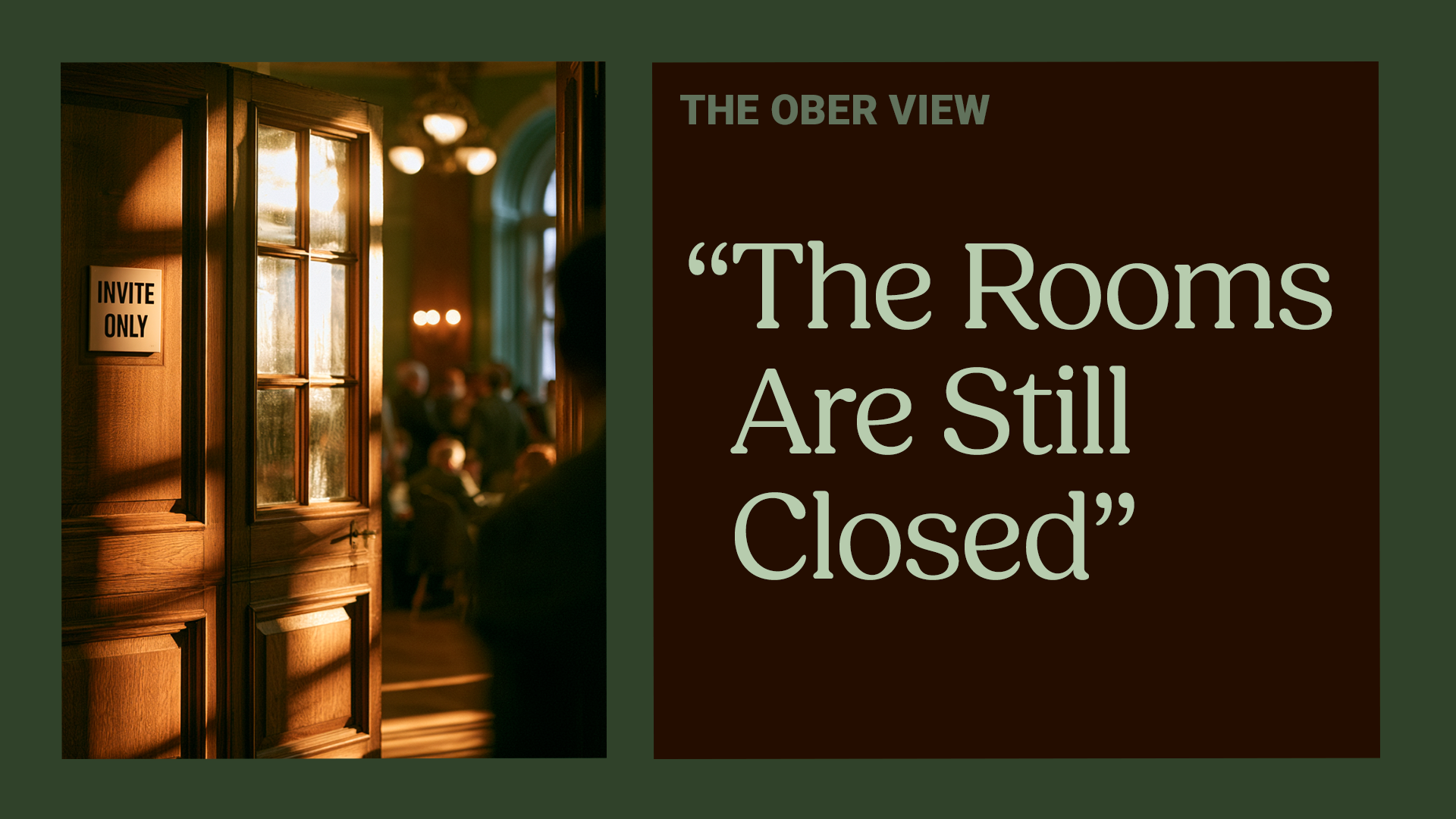
But as the number of events grows, I find myself wondering if we are becoming too comfortable with making the rooms smaller. More intimate gatherings can absolutely be valuable. The smaller the room, the more candid the conversation can be. The right group of people around a table can create relationships and ideas that simply aren't possible in a room of hundreds. But when every meaningful conversation becomes a smaller, more curated, invitation-only gathering, something else happens: access starts to narrow.
We need these conversations. But we also need to ask who is actually getting to have them. Because the rooms are still closed. Not every room needs to be open to everyone. There is value in intimate gatherings and candid conversations. But there is a difference between thoughtful curation and creating ecosystems where access depends almost entirely on whether you already know someone who can get you through the door.
You need the network before you can access the network. You need the invitation before you can meet the people who might eventually invite you. And that becomes a problem when some of the most meaningful exchanges I’m talking about- the relationships, information, capital, ideas, and opportunities- are happening behind those doors.
We talk about collaboration constantly, but too much of our work still happens in silos. Climate cannot only be a climate conversation. AI cannot only be a technology conversation. The future of our cities, our workforce, our communities, and our planet requires people who don't traditionally sit at the same table to actually find one another. We don't necessarily need more rooms, but we do need more doors!
More intentional invitations. More bridges between industries and communities. More opportunities for people outside the existing ecosystem to participate before they have accumulated the social capital required to enter it. We need information to move horizontally instead of simply trickling down.
And this matters because Climate Week is not just another week of panels and networking events. At its best, Climate Week is a moment to organize and mobilize. But as it stands, it’s another moment where people at the top talk and the rest of us hover around, gravitating, trying to soak in as much as we can.
It is one of the few moments when an extraordinary concentration of people thinking about the future are in the same city at the same time. That creates an opportunity that is much bigger than a calendar of events. It creates the possibility of connecting the person with the idea to the person with the resources, the organization with the community, the investor with the founder, the institution with the people closest to the problem.
But those connections don't happen if we keep everyone in separate rooms. The point of convening shouldn't simply be to have a good conversation. It should be to figure out what happens after the conversation. Who is going to take the idea forward? Who needs to be at the table? What resources are missing? What partnership could actually move the work? Who else needs to be brought into the room?
That is where access becomes so important.
Because people cannot mobilize around something they cannot access. They cannot collaborate with people they cannot meet. They cannot contribute information that never reaches them. And they cannot help build solutions when the opportunity to participate is reserved for those who already know how the system works.
I'll be honest: some of the excitement I had about convening, connecting, and imagining a better future has started to fall by the wayside when I continue to encounter the same closed networks and tightly held access. It is difficult to talk about building a more equitable future when the process of deciding who gets to participate in that future still feels so inequitable.
So as Climate Week begins, I am hopeful, but clearly asking for more. Not more rooms filled with people who already know one another. Rather, more access. More connectivity. More invitations. More bridges. Open the door, and then let's get to work!